



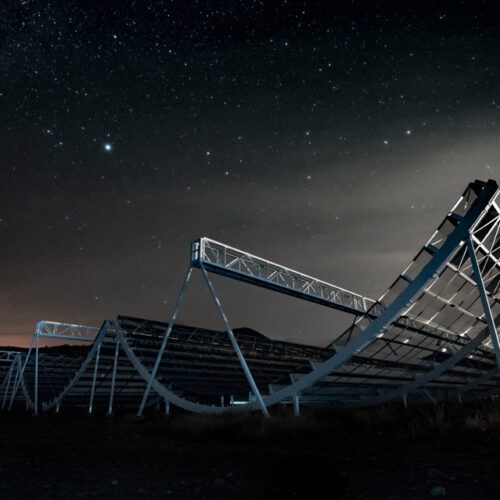
CHIME
A team of Canadian cosmologists, including the Dunlap Institute’s Professor Keith Vanderlinde, completed the build of a ground-breaking radio telescope at the Dominion Radio Astrophysical Observatory in B.C. called the Canadian Hydrogen Intensity Mapping Experiment (CHIME) in 2017.
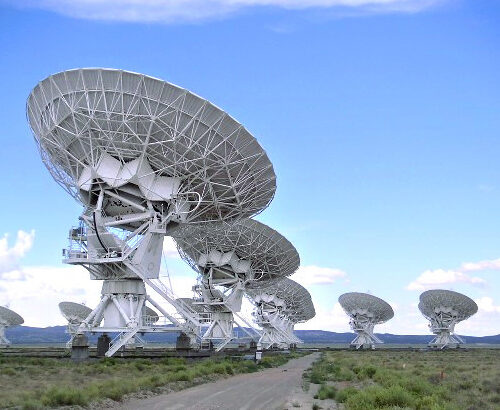
CIRADA
The Canadian Initiative for Radio Astronomy Data Analysis (CIRADA) is a $10M program intended to create sophisticated new software products and catalogues for studying the sky at radio wavelengths.
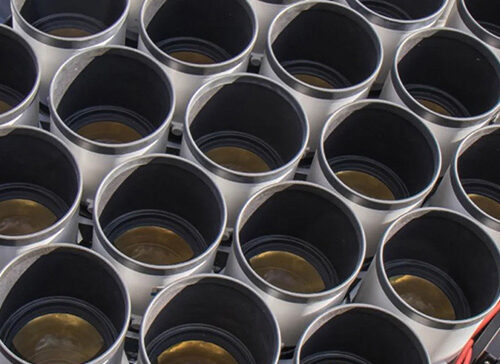
Dragonfly
Dragonfly is an innovative, multi-lens array designed for ultra-low surface brightness astronomy at visible wavelengths. Commissioned in 2013 with only three lenses, the array is growing in size and proving capable of detecting extremely faint, complex structure around galaxies.
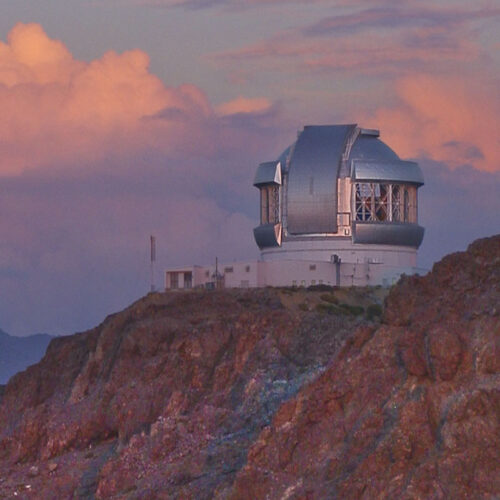
GIRMOS
The Dunlap Institute is leading the development of an infrared spectrograph for the Gemini Observatory called the Gemini Infrared Multi-Object Spectrograph, or GIRMOS.
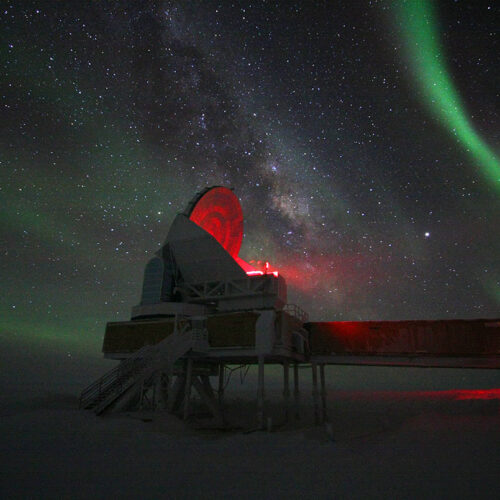
South Pole Telescope 3G
Since 2007, astronomers have been observing the Cosmic Microwave Background (CMB)—light from the Universe when it was only 380,000 years old—with the South Pole Telescope (SPT) at the U.S. National Science Foundation’s Amundsen-Scott South Pole Station.
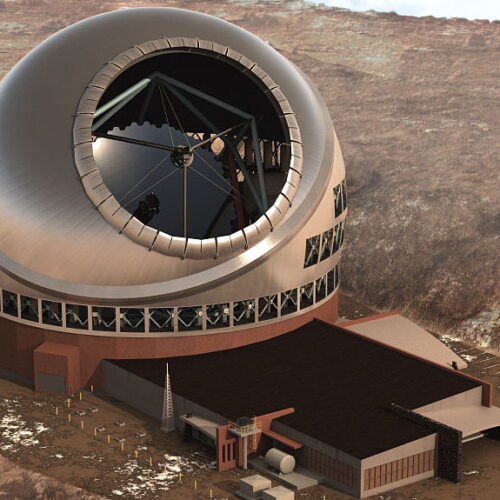
Spectrographs
Spectrographs are a fundamental tool of astronomical discovery. They reveal the temperature, chemical composition and motion of planets, stars, nebulae and galaxies. The Dunlap Institute is developing spectrographs commissioned on or destined for telescopes around the world.