



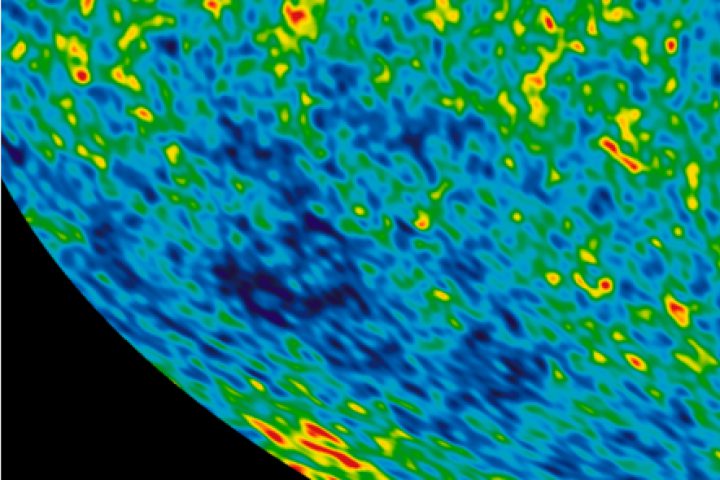
Cosmic Microwave Background
When distant stars explode into supernovae or when remote galaxies collide, it takes time for news of these events to reach us. Signals can only travel at the speed of light, and when an event occurs at cosmological distances.
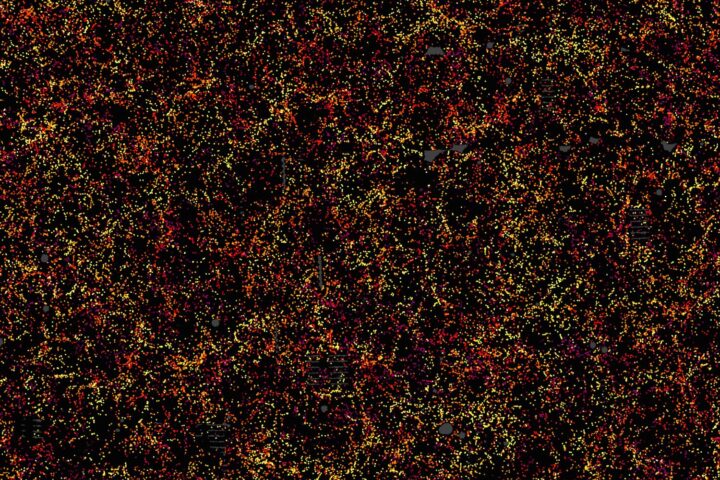
Baryonic Acoustic Oscillations
Understanding the nature of Dark Energy, the engine driving the accelerated expansion of the Universe, is one of the great challenges of modern science. One of the ways we can understand Dark Energy is by studying the expansion history of the cosmos. And we can understand the expansion history of the cosmos by studying Baryon Acoustic Oscillations (BAOs).
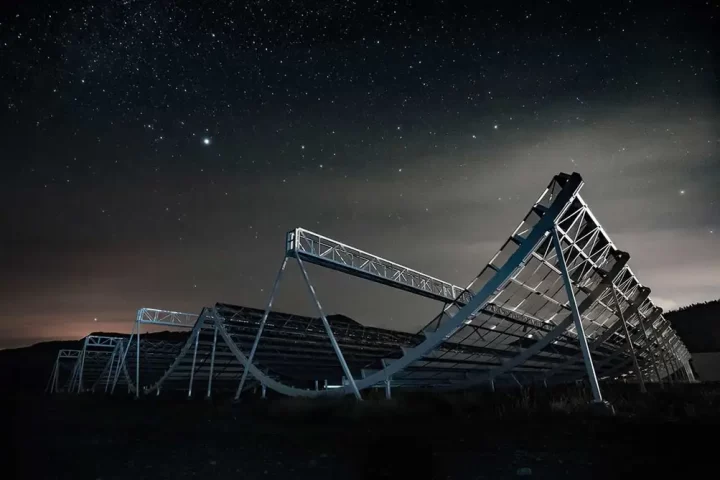
Hydrogen Intensity Mapping
The Universe is vast and even the relatively small portion we can observe contains hundreds of billions of galaxies, each comprising hundreds of billions of stars. Many fields of inquiry would be hugely advanced if we had full knowledge of its layout, but producing a detailed map of the entire cosmos is a prohibitively expensive task.
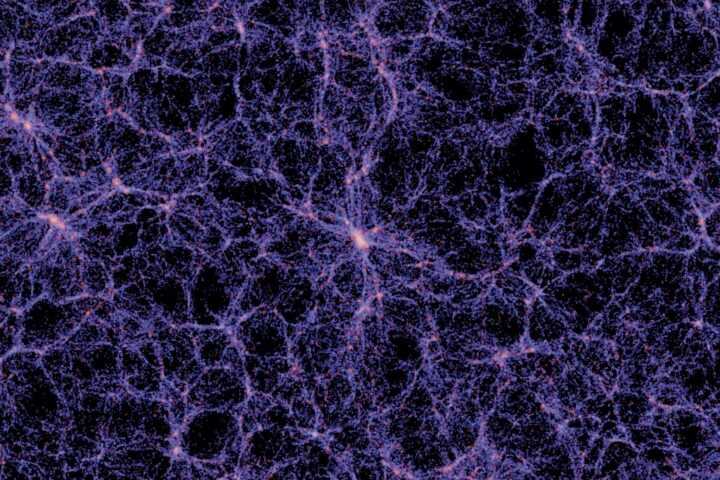
Large Scale Structure
The Universe on large scales is described not by individual stars or even entire galaxies. Zooming out, these objects clump into massive clusters of galaxies, the largest gravitationally collapsed objects in the Universe.