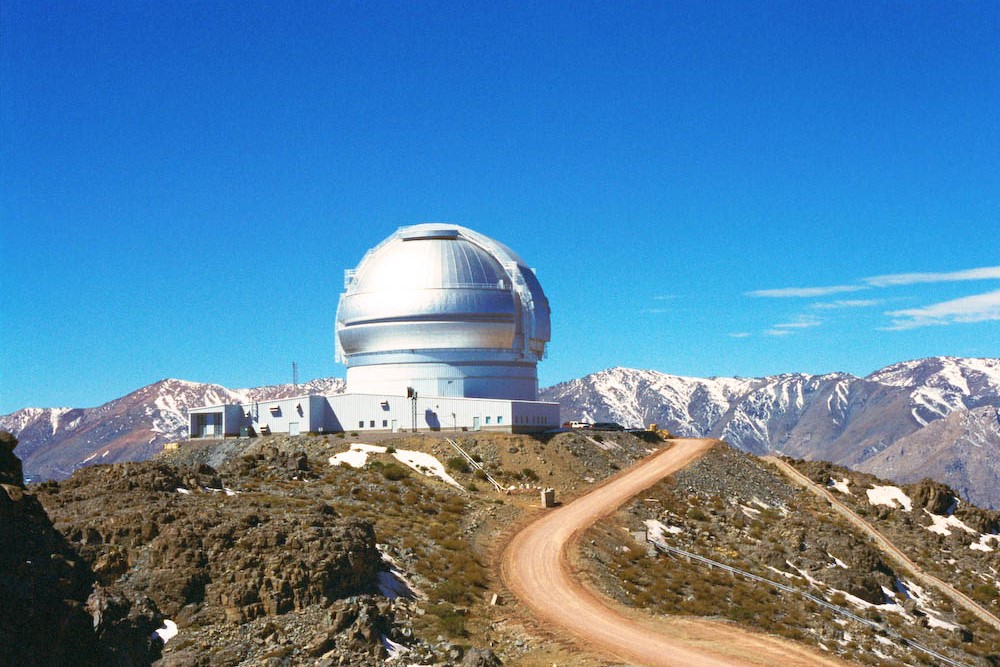
Formerly the Large Synoptic Survey Telescope (LSST), the Rubin Observatory is an 8.4-m optical and infrared telescope in Cerro Pachón, Chile. Over the 10-year period from 2022 to 2032, the Rubin Observatory will image 18,000 deg^2 of the sky in six bands, visiting every position about 800 times to reach a final co-added magnitude limit r = 27.5.
The Rubin Observatory will be transformational for a wide range of topics in astronomy, including weak lensing, BAOs, supernovae, NEOs, stellar astronomy, galaxy evolution, Galactic structure and transients. It will also explore new frontiers in astronomy data management, producing 30 TB of data and approximately one million transient alerts per night.
The Dunlap Institute has signed a Memorandum of Agreement with the LSST Corporation (LSSTC), with the aim of providing membership and scientific access for Canadian astronomers. Dunlap Institute Director, Professor Bryan Gaensler, is Lead Investigator for the Canadian LSST consortium.
Observatories