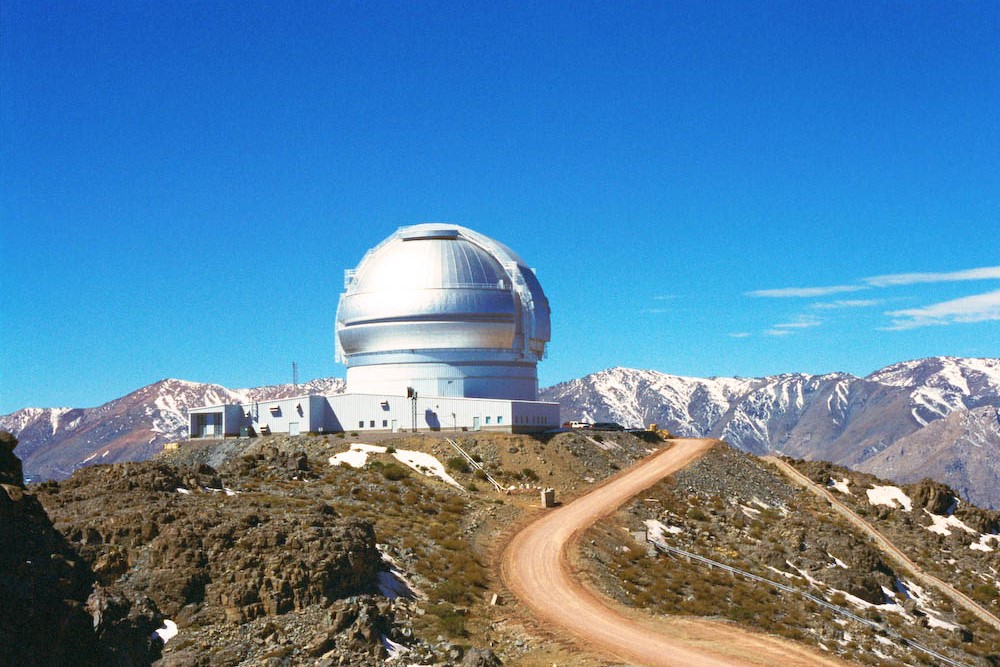
The Gemini Observatory consists of twin 8.1-meter diameter optical/infrared telescopes located on Mauna Kea in Hawai‘i and on Cerro Pachón in Chile. They are currently two of the largest, most advanced telescopes in the world. In 2015, astronomers commenced a survey of 600 nearby stars from Gemini South in Chile with the Gemini Planet Imager. GPI is an adaptive-optics imaging spectrograph designed to directly image Jupiter-size exoplanets around nearby stars.
The Gemini Observatory was built and is operated by a partnership of six countries including the United States, Canada, Chile, Australia, Brazil, and Argentina. Gemini was built and is operated by a partnership of six countries including the United States, Canada, Chile, Australia, Brazil, and Argentina.
Currently, the Dunlap Institute’s Professor Suresh Sivanandam is leading the development of an infrared spectrograph for the Gemini Observatory called the Gemini Infrared Multi-Object Spectrograph, or GIRMOS, which is designed to image four targets simultaneously and produce high angular-resolution and highly sensitive infrared images of the sky.