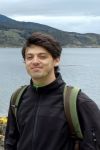
Dr. Cherry Ng
permanent astronomer
Pronouns:
she/her
Department:
Dunlap
Research:
GPU-based pulsar and Fast Radio Burst (FRB) correlator for the Canadian Hydrogen Intensity Mapping Experiment (CHIME).
Education:
PhD from the Max Planck Institute for Radio Astronomy in Germany
Cherry is currently a permanent astronomer of the Centre National de la Recherche Scientifique (CNRS) in France, under the Laboratoire de Physique et Chimie de l’Environnement et de l’Espace (LPC2E).
Cherry’s research interests lie in the area of pulsar and transients, as well as signal-processing algorithms for telescope instrumentation. She has discovered 60 pulsars (2.5% of known population at the time) with the Parkes Radio Telescope in Australia. She is a member of the North American pulsar timing array, NANOGrav, which aims to detection gravitational waves through precision pulsar timing.
At the Dunlap institute, Cherry worked with Prof. Keith Vanderlinde in the Long Wavelength Lab. She focused on the commissioning of the GPU-based pulsar and Fast Radio Burst (FRB) correlator for the Canadian Hydrogen Intensity Mapping Experiment (CHIME). CHIME began science operations in 2017 and plays a key role in unwrapping the mystery of Fast Radio Bursts (FRBs).
She received her PhD from the Max Planck Institute for Radio Astronomy in Germany, and was most recently a postdoctoral fellow at the University of British Columbia. She joined the Dunlap Institute in September 2017.