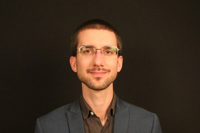
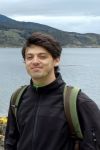
Dr. Erik Osinga
Pronouns:
he/him
Department:
Dunlap
Research:
Erik’s research focuses on understanding the role that magnetic fields and particle acceleration play in shaping the regions in and around galaxy clusters.
Education:
PhD at Leiden University in the Netherlands in 2023
Erik’s research focuses on understanding the role that magnetic fields and particle acceleration play in shaping the regions in and around galaxy clusters. Clusters grow by collisions with other clusters, shocking and heating the gas causing amplification of magnetic fields and acceleration of particles to near the speed of light, making clusters a strong source of radio synchrotron radiation. Erik is an observational astronomer, with expertise in various state-of-the-art radio telescopes, and often combines those data with other wavelengths such as optical and X-rays.
Erik joined the Dunlap Institute in December 2023, working on the VLASS and POSSUM surveys, both aimed at understanding the Universe’s magnetism through radio polarisation observations. Both surveys will create hundreds of terabytes of data to advance our understanding of the Universe. Erik works not only on interpreting these data, but also on processing it and making the science-ready data available to the broader astronomical community.
Erik obtained his PhD at Leiden University in the Netherlands in 2023, working with Prof. Huub Rottgering and Dr. Reinout van Weeren.